
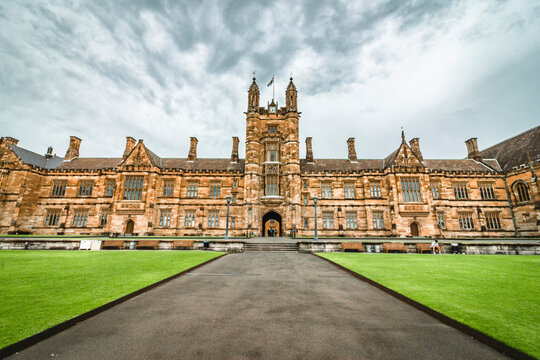
Study MBBS in Australia
Pursue a globally recognized medical education in Australia with world-class campuses and exceptional postgraduate pathways for international students.
About Medical Education in Australia
Australia’s international education sector was valued at $28.6 billion in 2016/17, according to the Australian Bureau of Statistics, with international student numbers up 15% year-on-year and the sector supporting more than 130,000 jobs nationally.
Why Australia?
Education Quality
Home to eight Nobel Prize winners, with every university federally regulated to maintain consistent national standards.
ESOS Act Protection
Requires institutions to meet strict standards on marketing, delivery, facilities and student support; listed on CRICOS.
Extended Support
Accurate information, legal/emergency/health service guidance, and visa-condition support for international students.
Qualification Recognition
The AQF makes Australian degrees easy to recognize globally, while NOOSR allows recognition of prior overseas qualifications.
MBBS in the Australia
Everything you need to know about the MBBS program — structure, eligibility, curriculum, and costs.
Offered at select schools like the University of Adelaide and University of New South Wales. Requires IELTS 7.0+, completion of higher secondary education, minimum age 17, and the UMAT.
The more common route at top universities (Melbourne, Sydney, Deakin, etc.), requiring a Bachelor’s degree, strong English proficiency, and a GAMSAT or MCAT score.
Pre-clinical years (1–3) build foundational knowledge in anatomy, pathophysiology and pharmacology; clinical years (2–3) place students in hospital/clinic placements. Learning blends lectures, CBL/PBL tutorials and clinical simulation, with assessments through MCQs, written exams and OSCEs. Unlike the US’s standardized USMLE, exit exams are set by individual medical schools.
Australia Medical Career Pathway
10+2 Education
Biology, Physics & Chemistry
Medical School Admission
University-Specific Requirements
5–6 Year Medical Degree / 4-Year MD
Medical Education
Provisional Registration
Medical Board of Australia / Ahpra
PGY1 Internship
47 Weeks Full-Time Equivalent
General Registration
Medical Board of Australia / Ahpra
PGY2 / Resident Medical Officer
Prevocational Medical Training
Specialty Training
Accredited Specialist Training Program
Specialist Registration
Medical Board of Australia
Specialist Medical Practice
General Practice / GP Training
↓ General Practitioner
Scholarships in Australia
International students have access to various financial aid options, including merit-based grants and government scholarships to help offset the cost of medical education.
Australia Awards Scholarships
Full tuition, return airfare, establishment allowance, living-expense contributions, and OSHC.
Notre Dame Scholarships
$5,000/year up to full attendance cost for outstanding incoming students.
Tasmanian International Scholarship
Up to 25% tuition reduction at the University of Tasmania.
Monash International Merit Award
For outstanding international students.
UTAS Sibling Discount
10% tuition reduction where a sibling has also studied at UTAS.
Lindsay McWha Funding
50% accommodation support for Indian students at the University of Adelaide.
IMGs seeking registration must qualify via the Competent Authority pathway, Standard pathway, or Specialist pathway. Graduates within Australia begin with a compulsory PGY1 internship, followed by PGY2+ years as a Resident Medical Officer before entering vocational (specialty) training.
Universities in Australia
Explore global accreditation, clinical training standards, and student outcomes across our partner network.
Frequently Asked Questions
Everything you need to know about studying MBBS in Australia.
Eligibility Requirements
Learn about the 50% PCB and NEET criteria.
Tuition Fees & Costs
Explore affordable options from ₹20L to ₹40L.
Degree Recognition
WHO listed, NMC approved, globally valid.
Clinical Rotations
Hands-on hospital training included.
Scholarships
Merit-based scholarships and discounts.
Career & USMLE
Pathways to USMLE, PLAB, and FMGE.

Student Life in Australia
Experience a vibrant, diverse, and supportive student life that balances rigorous medical education with a premium lifestyle.
Premium, secure, and modern living spaces designed for student comfort.
Choose from fully-furnished on-campus dorms or vetted off-campus apartments. Both options offer high-speed internet, air conditioning, and 24/7 maintenance.

